Boutique By Nature | Caribbean Escapes Rooted in Place
There comes a point when luxury travel becomes less about seeing more places and more about experiencing one place well.
For many discerning travelers, the Caribbean is no longer defined by cruise ship ports, sprawling resorts, or the desire to check another island off a list. Instead, travel has become more intentional. Rather than island hopping, we’re stepping into destinations—slowing down long enough to understand the people, landscapes, traditions, and communities that make each island unique.
The hotels in this collection have quietly embraced that philosophy for years. Some have earned internationally recognized sustainability certifications. Others simply practice a more thoughtful way of welcoming guests through local partnerships, architectural restraint, community involvement, or a genuine respect for the places they call home. What unites them is not a label, but a shared belief that luxury should enhance a destination rather than overshadow it.
During recent travels across the Caribbean, I noticed a common thread. The most memorable stays weren’t defined by extravagant amenities or endless entertainment. Instead, they were shaped by people deeply connected to their islands, inviting guests not simply to visit, but to experience each destination with greater intention.
These six Caribbean escapes embody a thoughtful approach to boutique luxury, where a genuine sense of place shapes every stay. The journey concludes with one destination whose story is still unfolding.
Living the Destination
Hotel Manapany, St. Barthélemy
Where Luxury Returns to What Matters
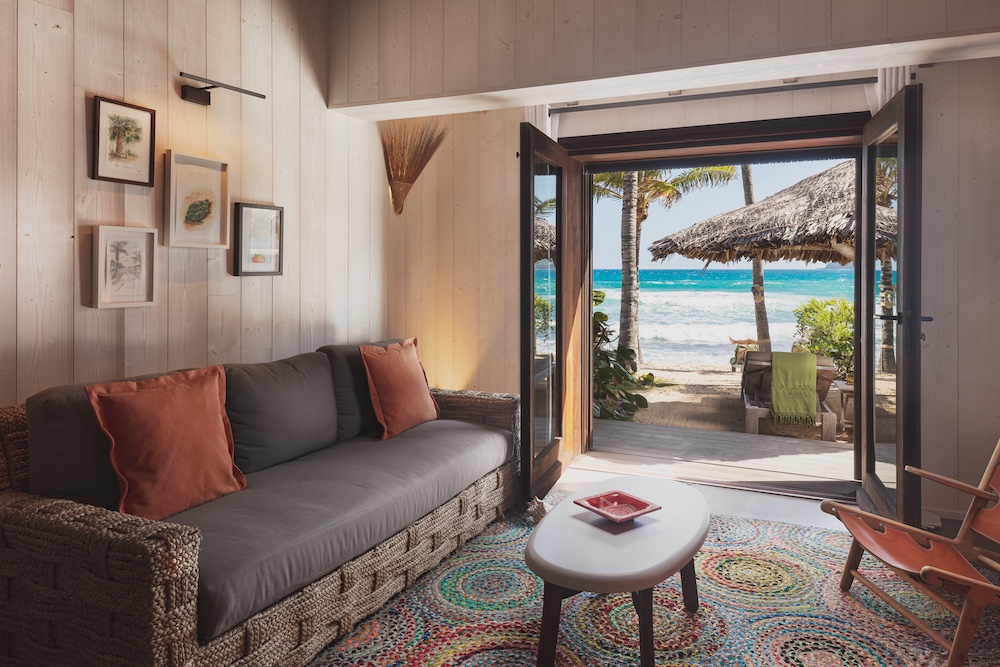
Unlike the calm, postcard-perfect beaches many associate with St. Barth, Anse des Cayes offers a wilder side of the island. The rhythmic sound of Atlantic waves crashing against the rocky shoreline becomes part of the experience, quietly encouraging guests to slow down, unplug, and embrace the island’s natural rhythm.
That feeling defines Hotel Manapany.
Nestled between tropical gardens and the sea, the boutique eco-resort embraces understated elegance rather than excess. Contemporary French design blends effortlessly with handcrafted Caribbean furnishings, vibrant textiles, and locally inspired artwork, creating spaces that feel sophisticated without ever losing their sense of place.
The hotel’s environmental philosophy is equally intentional. Green Key certified, Manapany incorporates solar energy, water conservation, electric transportation, and thoughtful environmental practices throughout the property. The restaurant embraces the same philosophy, offering fresh, healthy cuisine inspired by Caribbean flavours and Mediterranean influences. Sustainability is never presented as a checklist. It simply feels like the natural way the hotel chooses to exist.
The people, however, are what transform a beautiful hotel into a memorable experience.
I met Diana Bourel during one of her yoga sessions while staying at Hotel Manapany. Her calm presence reflected the same pace that defines the property itself. Beyond the yoga studio, her guided hikes and wellness experiences invite guests to discover a quieter, more natural side of Saint Barth that exists beyond its glamorous reputation.
A longtime resident of the island, Diana has spent decades helping visitors reconnect with themselves through movement, breathwork, meditation, and nature. Her recently launched Selva wellness residency builds on that philosophy, offering experiences that encourage presence rather than performance. Wellness here isn’t measured by spa menus or fitness schedules. It begins by paying attention—to the sea, the landscape, and ultimately to yourself.
That philosophy mirrors the essence of Manapany itself.
Luxury isn’t always found in what a hotel adds.
Sometimes it’s found in what it quietly encourages you to leave behind.
Mount Cinnamon Beach & Wellness Resort, Grenada
Growing Community Alongside Tourism
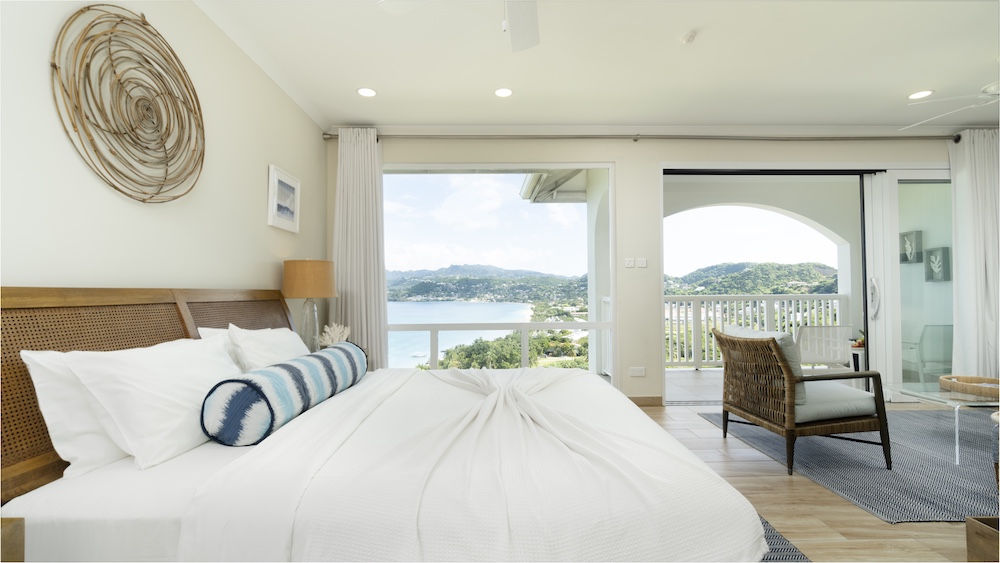
Grand Anse Beach has long been one of Grenada’s defining landscapes, its sweeping crescent of white sand stretching along remarkably calm Caribbean waters. Perched above it on the hillside, Mount Cinnamon Beach & Wellness Resort enjoys panoramic views that could easily become the centerpiece of the guest experience.
Instead, the resort tells a much deeper story.
Owner Barry Collymore has long championed the idea that tourism should strengthen Grenada itself. Creating opportunities for local people, investing in education, supporting farmers and producers, and protecting the island’s natural resources are not separate initiatives—they are part of the same philosophy.
That commitment is visible throughout the property.
Fresh herbs, tropical fruits, and vegetables from the resort’s gardens regularly appear on the menu, while relationships with local fishermen and farmers connect guests directly to Grenada’s agricultural traditions. Dining becomes another expression of the island rather than simply another restaurant overlooking the sea.
Mount Cinnamon’s sustainability credentials—including Green Globe certification and its membership in the United Nations Global Compact Network as the Caribbean’s first participant from the Travel & Leisure sector—reflect years of planning rather than a response to changing travel trends. Environmental stewardship, careful resource management, and community investment are simply woven into how the resort operates.
Perhaps one of Barry’s most meaningful contributions extends well beyond Mount Cinnamon’s grounds.
As co-founder of the West Indies School of Hospitality, he has helped create educational pathways for Grenadians pursuing careers in hospitality, investing not only in today’s workforce but in the island’s long-term future. It is a reminder that sustainable tourism isn’t measured solely by environmental initiatives. It is equally defined by how destinations invest in the people who call them home.
During my stay, that philosophy revealed itself in quiet moments. Conversations with staff never felt rehearsed. Service came with genuine warmth rather than polished formality. There was an unmistakable sense of pride in sharing Grenada—not simply the resort—with visitors.
It reinforced something I’ve come to appreciate about thoughtful luxury.
The finest hotels don’t isolate you from a destination.
They help you understand it.
Le Temps des Cerises Beach Hotel & Restaurant, Saint Martin
Where the Culinary Capital of the Caribbean Slows the Pace
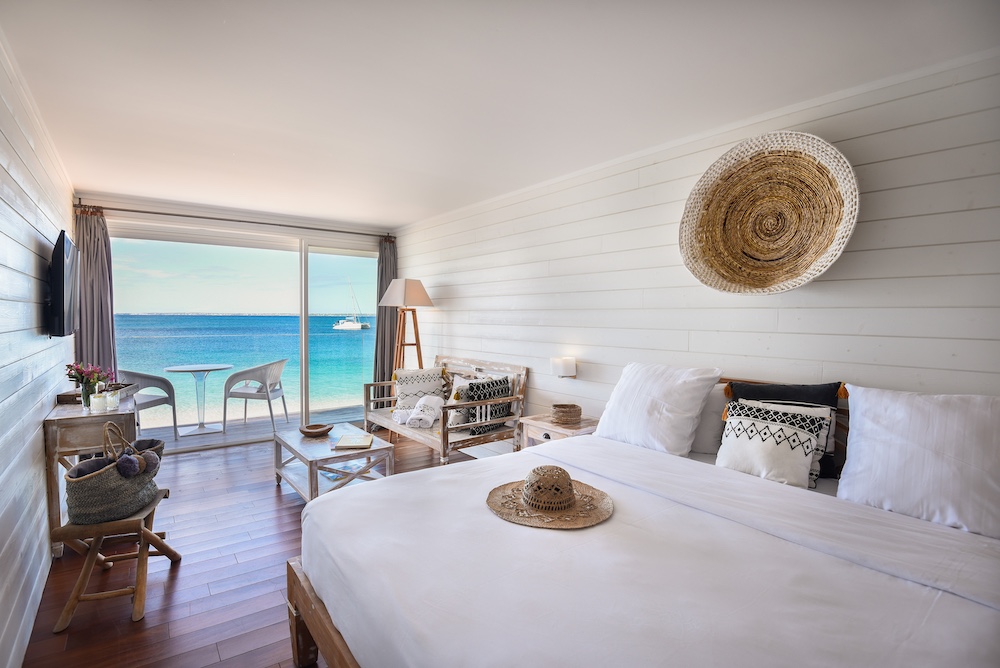
Grand Case has earned its reputation as the Culinary Capital of the Caribbean, where celebrated restaurants line a walkable stretch of waterfront that feels unmistakably French while embracing the relaxed spirit of island life.
Tucked directly along the beach, Le Temps des Cerises Beach Hotel & Restaurant reflects that balance beautifully.
With just a small collection of beachfront rooms overlooking Grand Case Bay, the boutique property favors intimacy over spectacle. There are no sprawling grounds or elaborate distractions. Instead, life unfolds at an unhurried pace, where mornings begin with the sea just steps away and afternoons linger comfortably between the beach and one of the island’s most respected dining destinations.
Food is central to the experience.
The restaurant has become a destination in its own right, celebrating refined French-Caribbean cuisine while remaining approachable and relaxed. Seasonal menus, thoughtfully selected wines, and occasional culinary events—including special wine-pairing experiences—reflect the village’s enduring reputation for exceptional gastronomy without sacrificing its barefoot charm.
What impressed me most, however, wasn’t simply the cuisine.
It was the atmosphere.
Guests naturally drift between the hotel, the beach, neighboring cafés, local boutiques, and the remarkable collection of independently owned restaurants that have made Grand Case internationally recognized. The destination encourages exploration on foot, rewarding curiosity instead of schedules.
Le Temps des Cerises also illustrates an important point about sustainable luxury.
Not every meaningful travel experience begins with an environmental certification.
Sometimes sustainability is expressed through something much simpler: choosing a property that has grown naturally within its community, where local businesses thrive, development remains intentionally intimate, and visitors become part of the destination rather than spectators observing it from behind resort gates.
In Grand Case, luxury feels wonderfully uncomplicated.
It is found in exceptional food, genuine hospitality, and a village confident enough to let its character speak for itself.
Places That Preserve Their Identity
Montpelier, Nevis
Where History Becomes Hospitality
Nevis has never sought the spotlight.
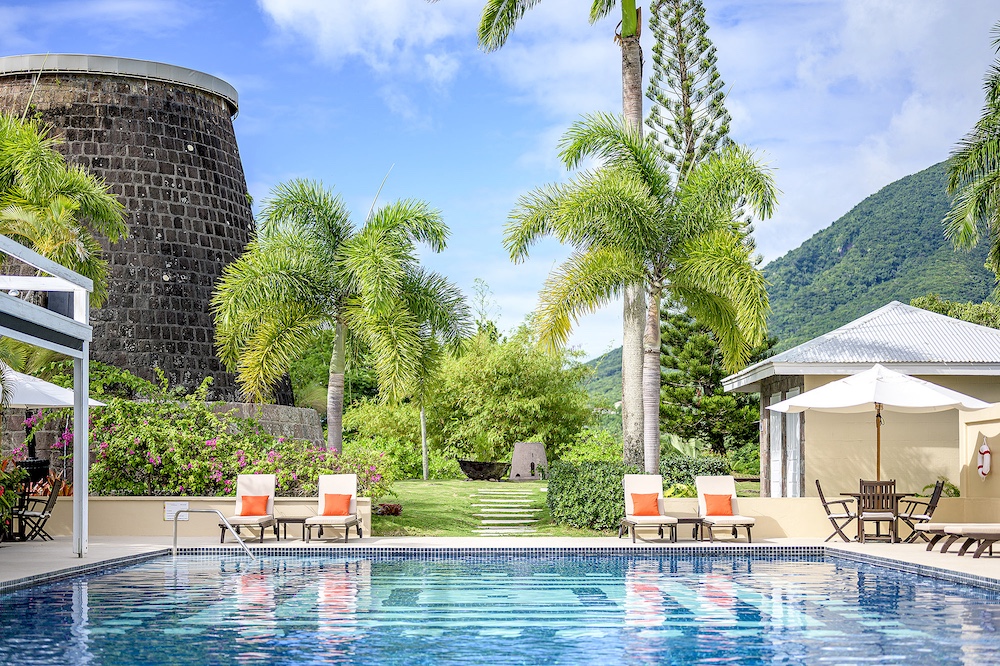
Its appeal has always been quieter, inviting travelers who appreciate history, natural beauty, and a slower rhythm over nightlife or grand spectacle. Tucked into the foothills of Nevis Peak, Montpelier reflects that same understated confidence.
Originally established as an 18th-century sugar plantation, the property has evolved into one of the Caribbean’s most refined boutique hotels while preserving the character of the estate that came before it. Rather than erasing its history, Montpelier embraces it, allowing stone buildings, tropical gardens, and wide verandas to tell part of the island’s story.
With just eighteen individually designed rooms and villas, every space feels personal. Light-filled interiors, bold Caribbean-inspired textiles, and private terraces celebrate both comfort and place without unnecessary excess.
Like Nevis itself, the experience unfolds gently.
Days are spent wandering lush gardens, enjoying one of the property’s intimate restaurants, or venturing to the island’s uncrowded beaches just minutes away. Nothing feels hurried, and nothing needs to.
What makes Montpelier especially compelling is that it reflects Nevis’ broader philosophy of tourism. Rather than pursuing large-scale development, the island has cultivated a reputation for low-density hospitality that protects both its heritage and its natural beauty. Luxury here isn’t measured by size. It is measured by authenticity, thoughtful stewardship, and a genuine connection to the island’s past.
Jade Mountain, Saint Lucia
When Architecture Steps Aside
Some hotels compete with the landscape.
Jade Mountain does the opposite.
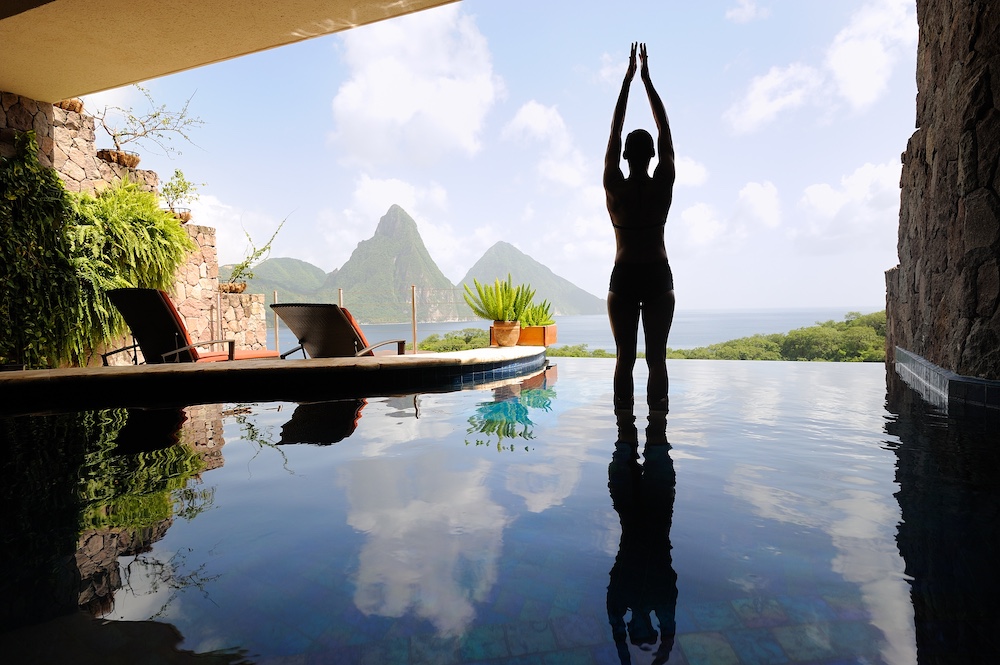
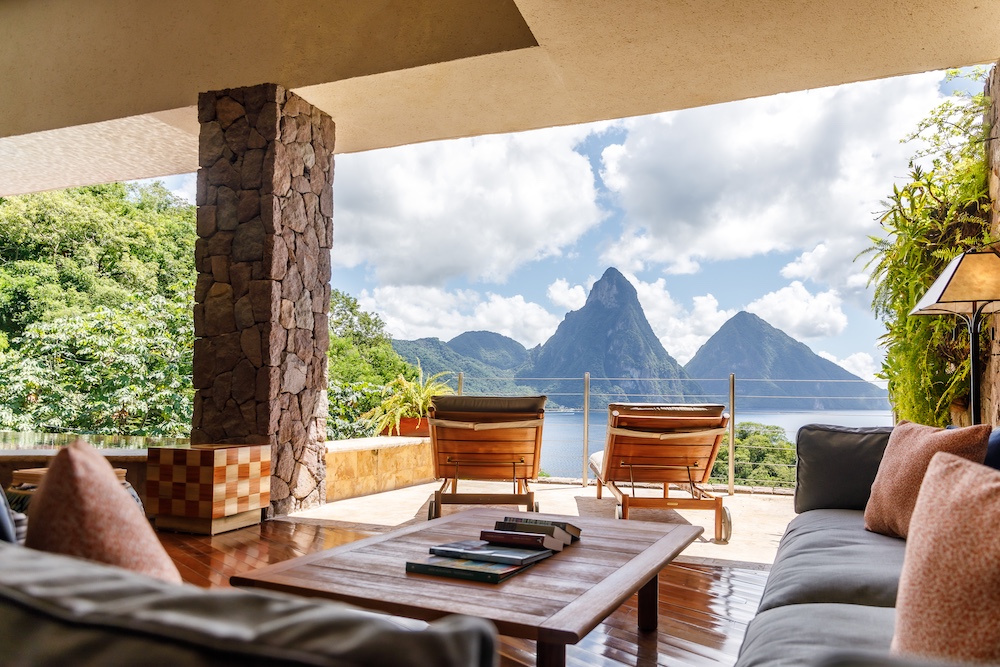
Perched high above Saint Lucia’s southwestern coastline, architect-owner Nick Troubetzkoy’s celebrated design removes what would traditionally be the fourth wall, allowing every suite to open completely toward the Pitons and the Caribbean Sea beyond.
The effect is extraordinary.
Rather than framing nature through a window, the landscape becomes part of the room itself. Breezes replace air conditioning, birdsong becomes the soundtrack, and sunrise quietly announces the beginning of each day.
It is an architectural philosophy rooted in restraint.
That same philosophy extends to the dining experience. At the Jade Mountain Club, James Beard Award-winning chef Allen Susser’s “Jade Cuisine” celebrates the bold flavors of Saint Lucia and the world’s tropical cultures, embracing seasonal ingredients and local produce whenever possible. Fresh, vibrant, and deeply connected to the island, the cuisine reflects the same respect for place that defines the architecture itself.
Few hotels demonstrate more clearly that sometimes the greatest luxury is simply allowing nature to remain the main attraction.
Ambergris Cay, Turks & Caicos
Luxury by Design—and by What Is Left Undisturbed
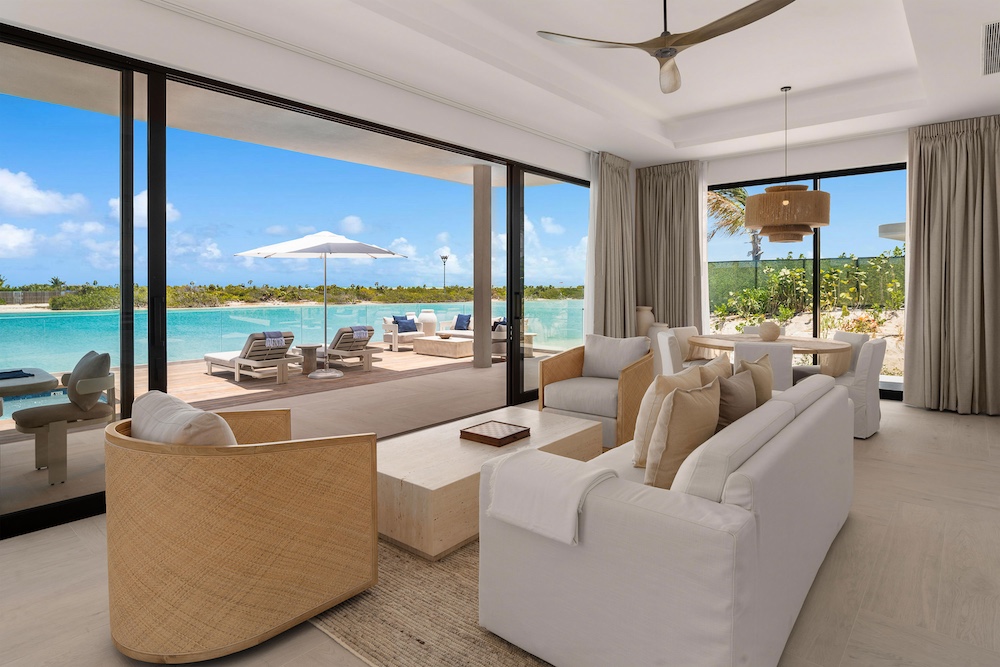
Luxury often begins with what is added.
Ambergris Cay suggests it can also begin with what is intentionally left untouched.
Located on a private island in the southeastern Turks and Caicos archipelago, the resort embraces a philosophy of low-density development where wide-open landscapes remain as important as the accommodations themselves. Its collection of private villas and newly introduced Waterside Bungalows reflects that same commitment to space, privacy, and a slower pace of island life.
Each bungalow opens directly onto the water, complete with a private plunge pool, kayak, and paddleboard, encouraging guests to experience the island from the shoreline rather than simply admire it from afar.
That same philosophy extends throughout the property. Seasonal menus celebrate fresh ingredients and island-inspired cuisine, while the resort’s intentionally restrained footprint allows the surrounding landscape to remain the defining feature of the experience.
Perhaps what makes Ambergris Cay distinctive isn’t simply what has been created, but what has deliberately been left untouched. Narrow unpaved roads minimize disruption to fragile ecosystems, native vegetation is preserved wherever possible, and development remains intentionally low density.
It is a reminder that thoughtful luxury is often defined not by abundance, but by restraint.
Sometimes preserving a place is the greatest luxury of all.
A Destination to Watch
Miches, Dominican Republic
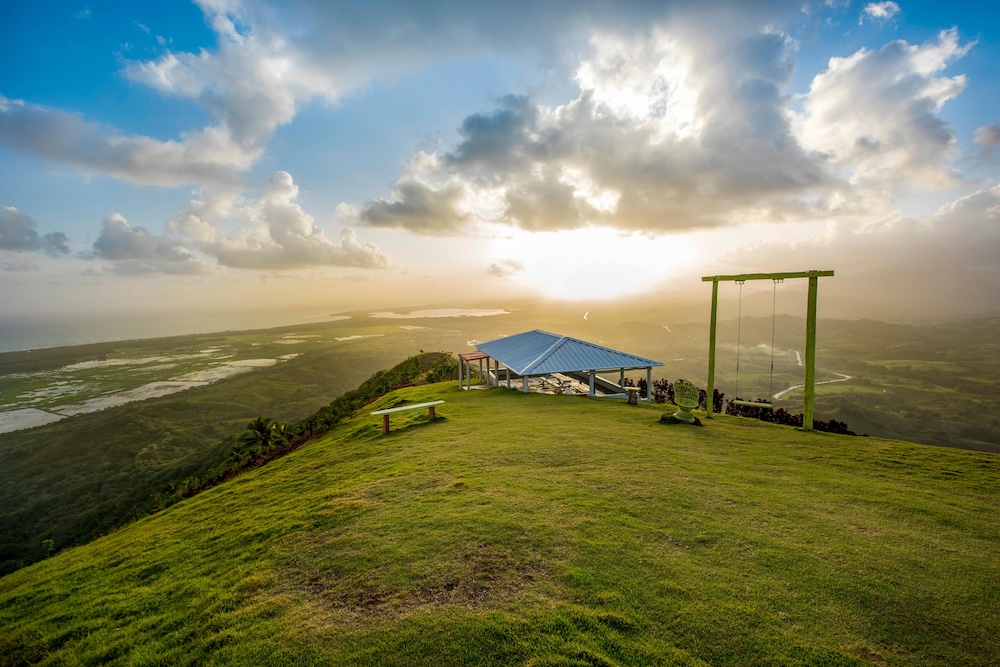
Unlike the boutique hotels featured throughout this article, Miches is a destination whose story is still unfolding.
Stretching along the Dominican Republic’s Emerald Coast, this largely undeveloped region is attracting international attention for its pristine beaches, protected marine habitats, waterfalls, mangrove forests, and extraordinary biodiversity. What makes Miches especially compelling, however, is the intention to preserve those natural assets as the destination grows.
Tourism leaders have spoken openly about learning from the past and embracing a more balanced approach—one that values conservation, local communities, and thoughtful planning alongside economic opportunity. Developments such as Aldea Miches and Maralda reflect that vision, while internationally recognized hotel brands bring renewed attention to a destination many travelers have yet to discover.
Whether Miches ultimately becomes a model for responsible luxury tourism remains to be seen. For now, its greatest promise lies in the opportunity to shape a destination before overdevelopment defines it.
For travelers who value destinations with a strong sense of place, Miches is one of the Caribbean’s most compelling stories to watch.
More Than a Place to Stay
Luxury isn’t defined by how much a destination offers, but by how deeply it connects us to the place we’ve chosen to explore.
Across the Caribbean, these boutique escapes demonstrate that thoughtful luxury can take many forms. Sometimes it’s found in a wellness guide introducing guests to an island’s quieter side. Sometimes it’s reflected in a hotel owner’s commitment to local communities, a restaurant that celebrates its culinary heritage, or a destination choosing to protect its natural landscape as it grows.
What unites them is a shared respect for place.
For travelers seeking more than beautiful beaches, these destinations offer something increasingly rare: the opportunity to slow down, connect more deeply, and leave with a greater appreciation for the people, culture, and landscapes that make each island unique.
Perhaps the future of Caribbean travel isn’t about seeing more islands, but about stepping more fully into one.